iOS · Space Weather
Know the sky tonight.
Astraflare fuses NOAA, NASA and USNO data into one answer: is the aurora worth driving out for, which planets are up, is a storm coming?
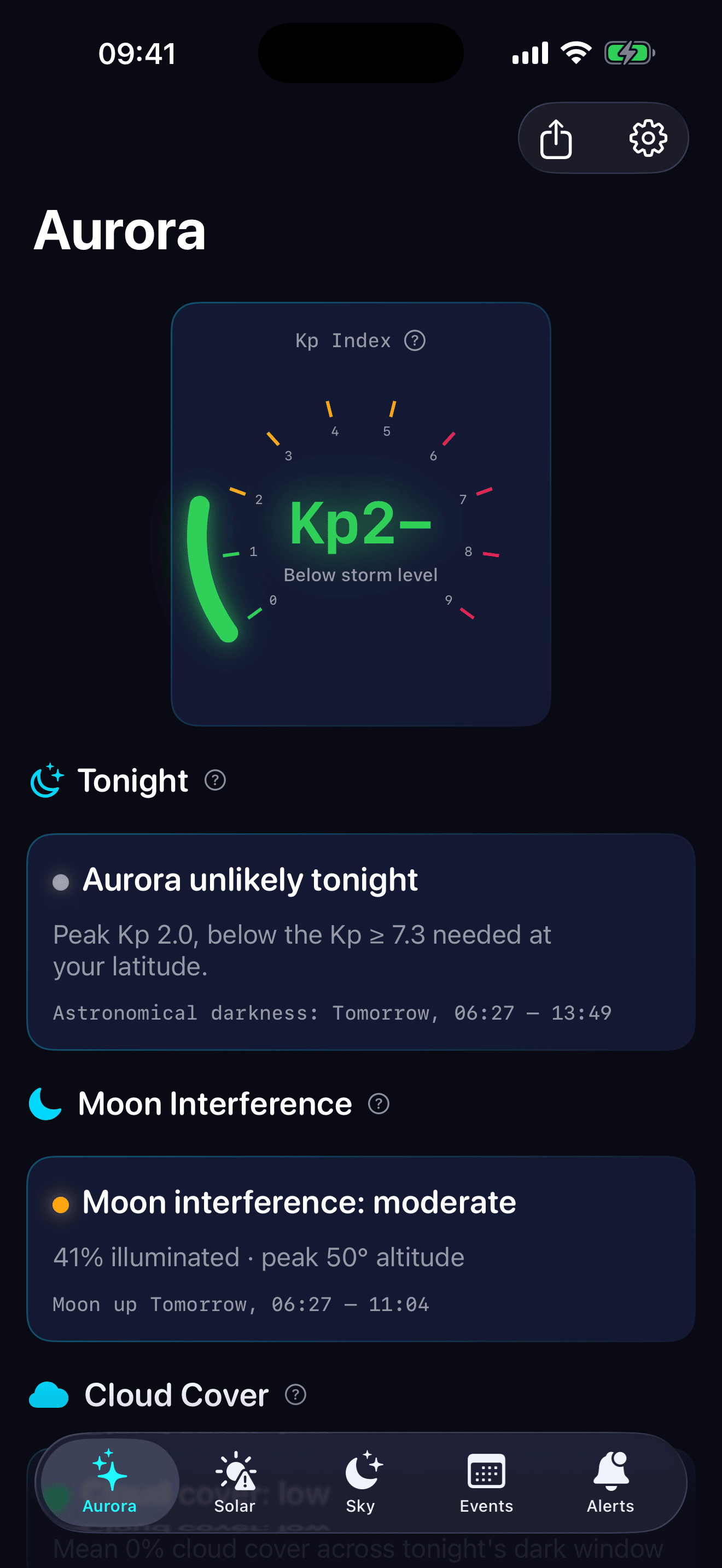
Astraflare fuses NOAA, NASA and USNO data into one answer: is the aurora worth driving out for, which planets are up, is a storm coming?
Live Kp, 3-day forecast, cloud cover, moon interference and your latitude — combined into a single verdict card.
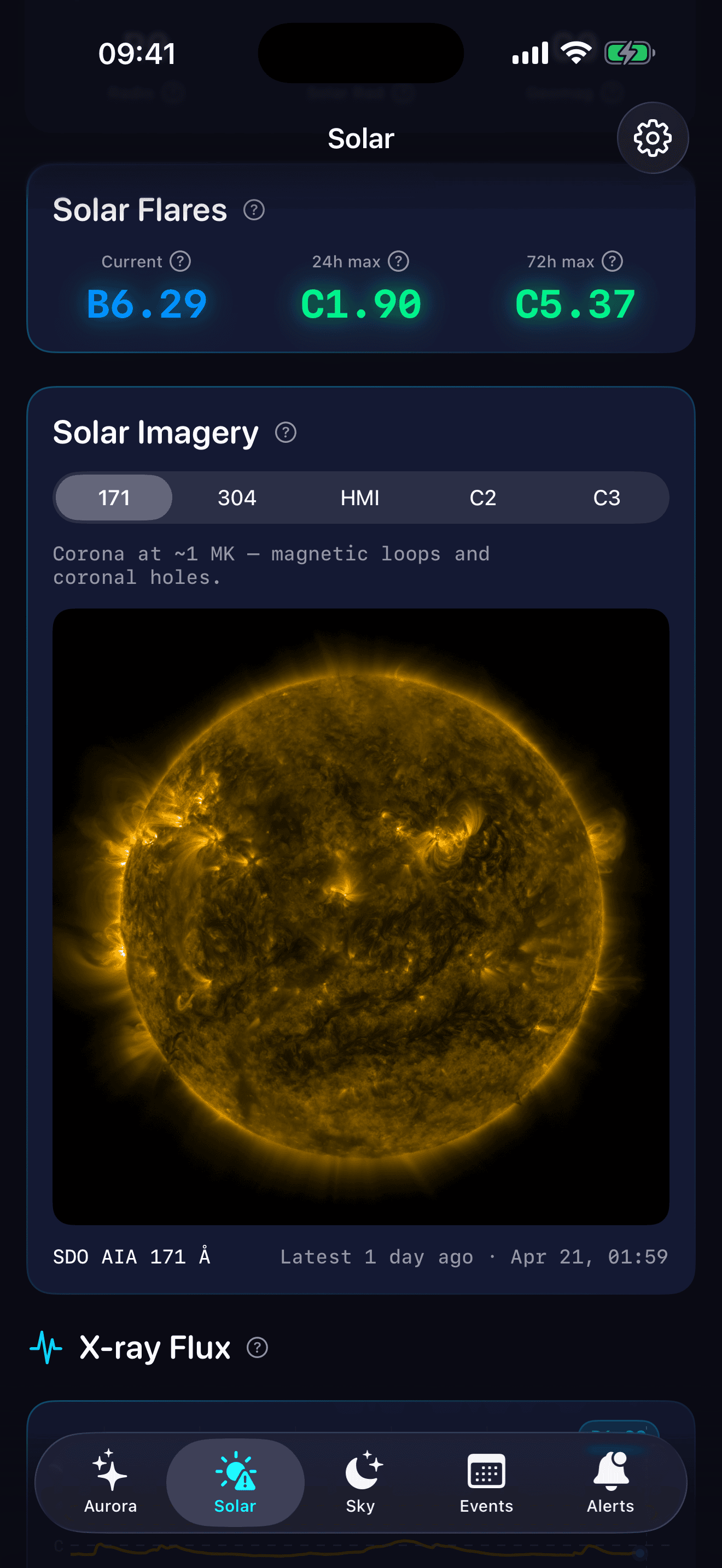
SDO and SOHO imagery, X-ray flux, flare history and a 3-D CME orrery — all one tap away.
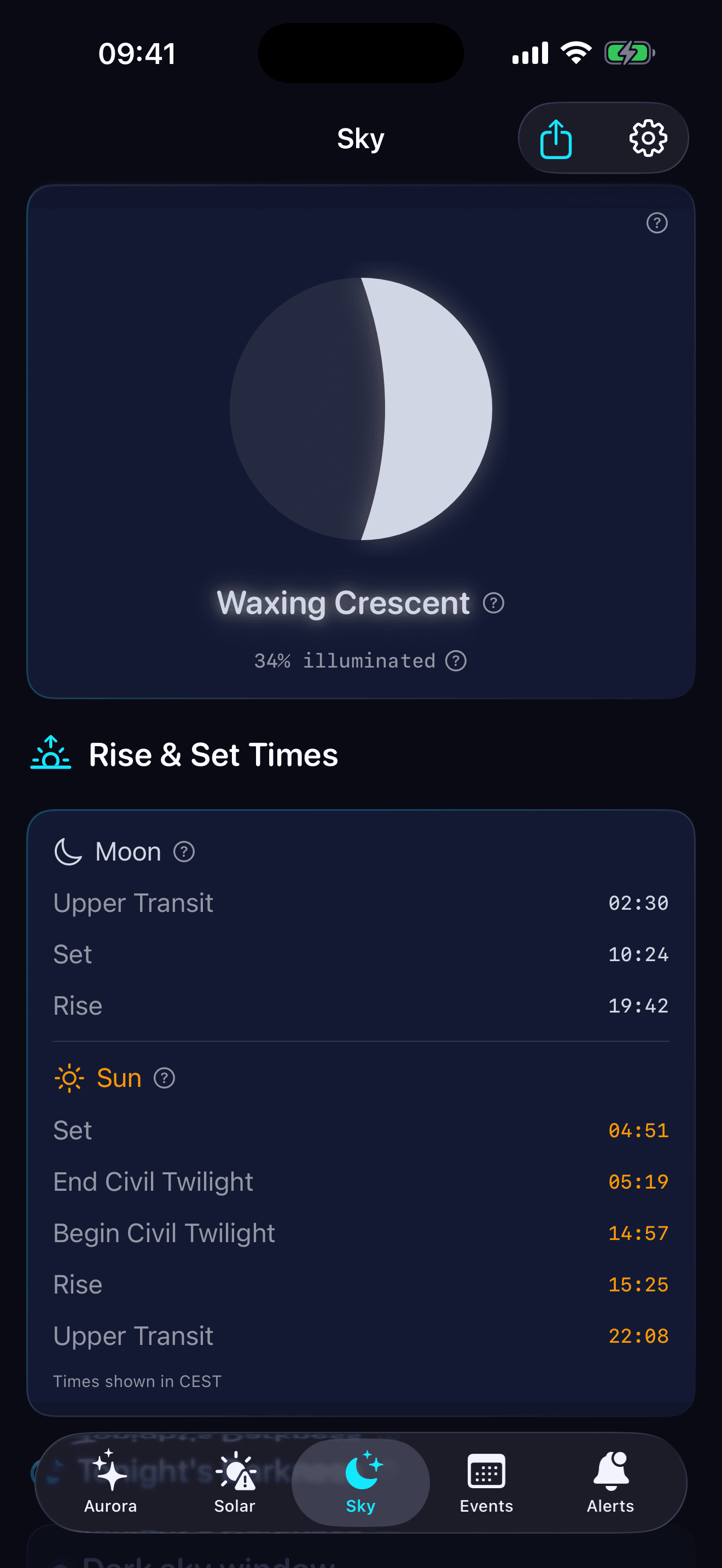
Moon, planets, comets and satellite passes — computed locally, accurate to the minute.
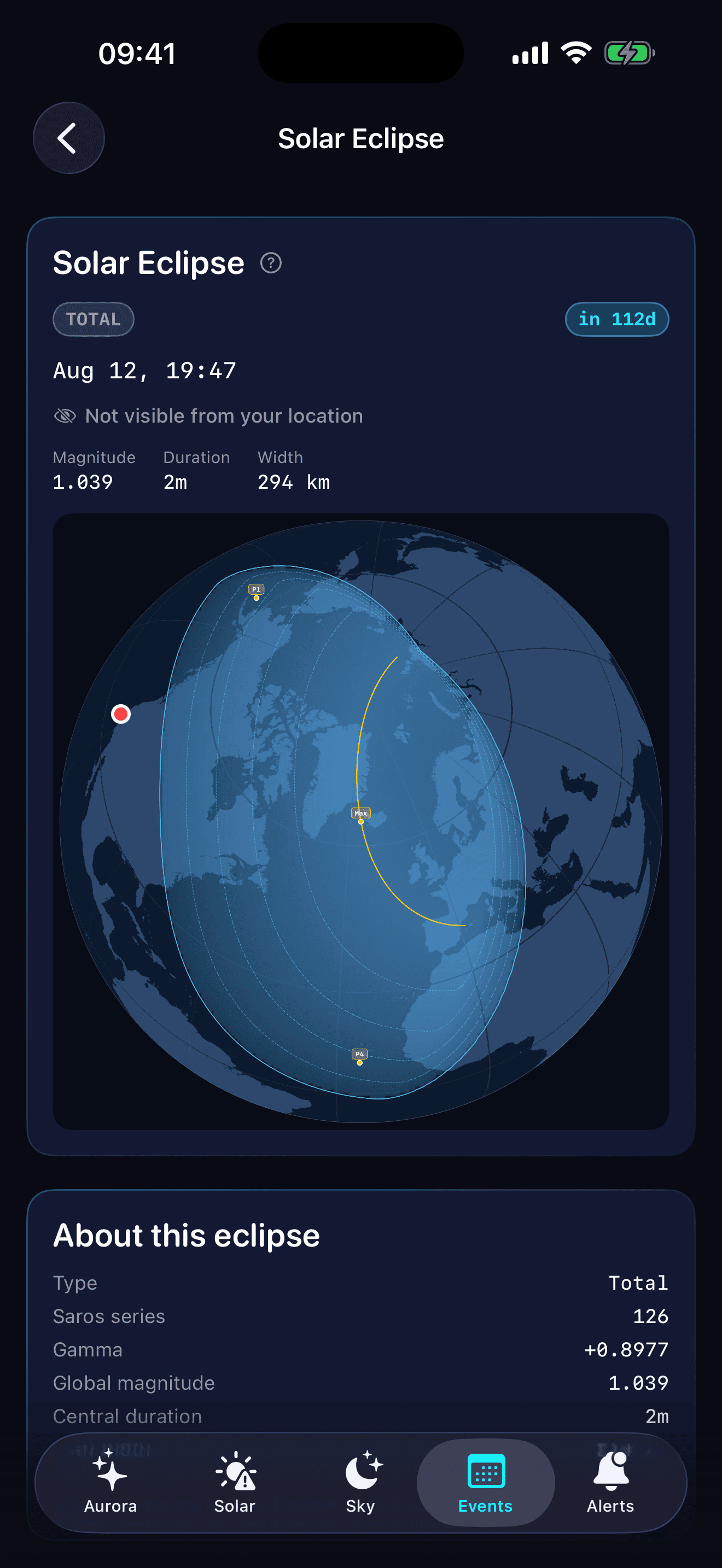
Every solar and lunar eclipse through 2100, plus meteor showers, conjunctions and planet parades — tailored to where you are.
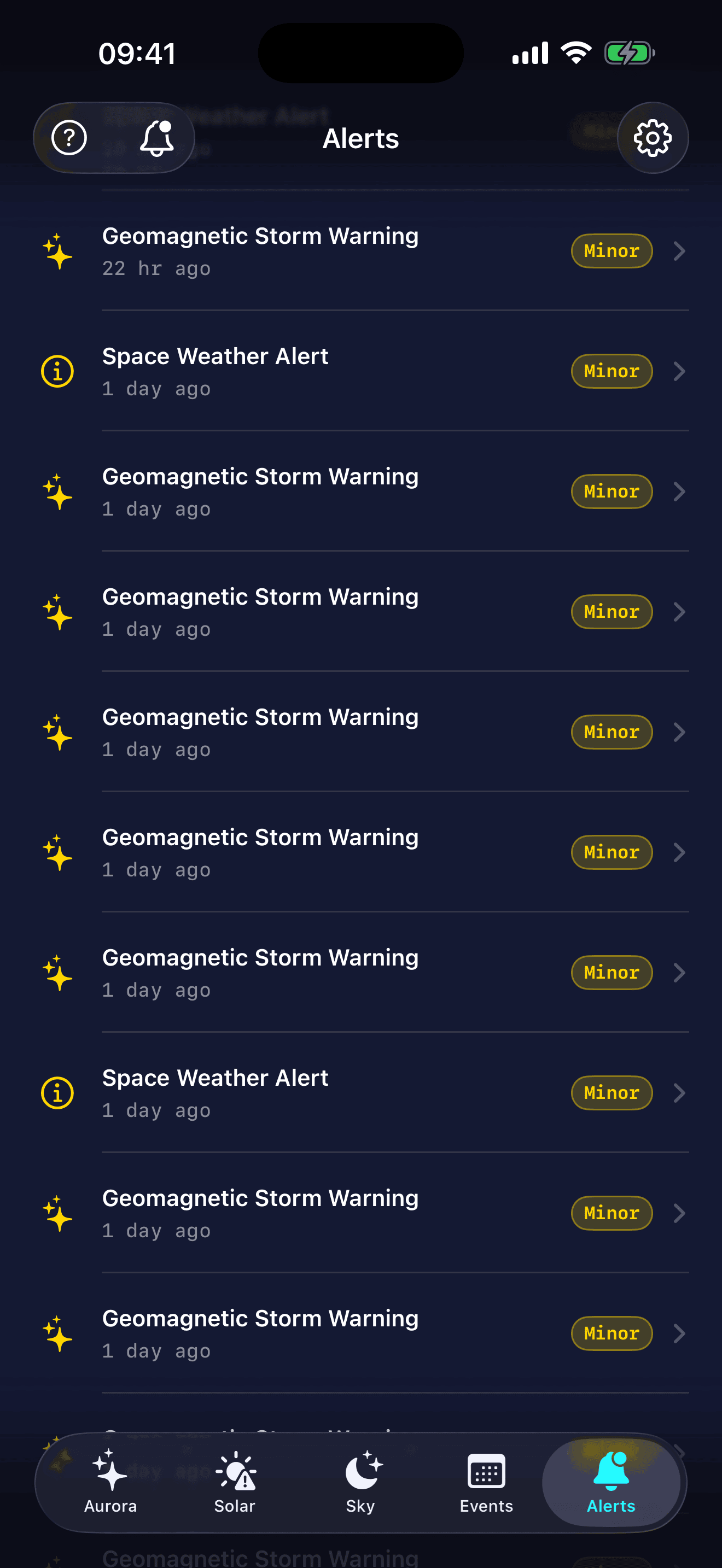
Live SWPC bulletins plus configurable thresholds — Kp, flare class, conjunction separation, eclipses at your location.
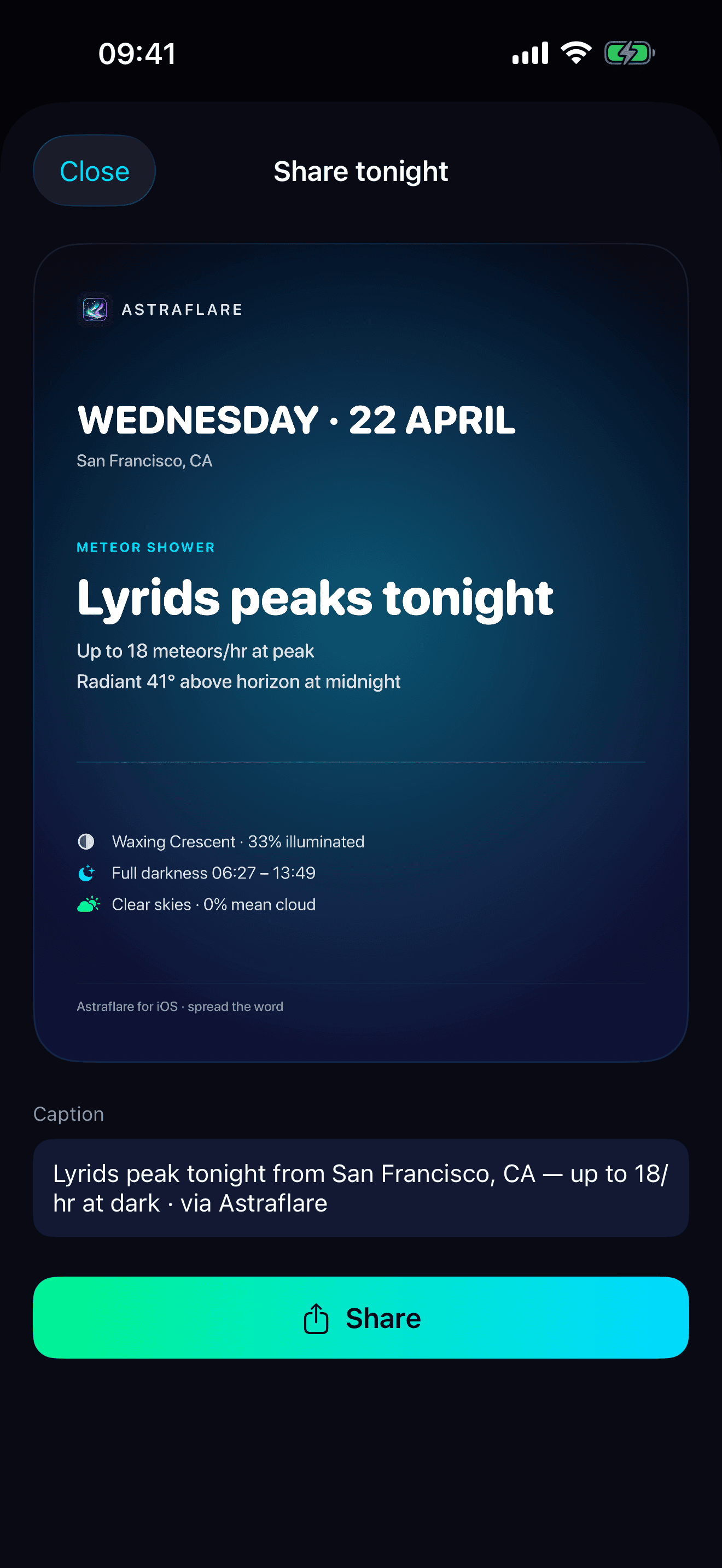
One tap generates a 1080 × 1350 portrait card with the headline event — aurora, meteor peak, conjunction, eclipse or bright comet — ready for wherever you post.
Live data from seven public, unauthenticated sources — no scraping, no middlemen.
The short honest answers.
Yes. No account, no paywall, no in-app purchases. Astraflare is made independently; we may add optional features later but the core — aurora, solar, sky, events, alerts — stays free.
Partially. Anything the app has recently fetched (aurora map tiles, solar imagery, planet positions, moon phases, the eclipse catalogue through 2100) stays available offline. Live data naturally needs a connection.
Your location is used on-device to compute local aurora visibility, eclipse circumstances, satellite passes and Bortle light-pollution hints. The only outbound use is fetching a cloud-cover forecast from Open-Meteo, with your latitude and longitude rounded to two decimal places (about 1 km) so the cache doesn't fragment on GPS jitter. Nothing goes to our servers.
It's built natively in SwiftUI for iOS 17+. Native buys us the SGP4 satellite propagator, the eclipse Besselian-element solver, CoreLocation precision and background task scheduling — all without a cross-platform abstraction. An iPad layout is on the list; Android is not on the short-term roadmap.
As accurate as NOAA's OVATION model and the 3-day Kp forecast — which is to say, pretty good a day out and rougher past that. Astraflare doesn't invent its own forecast; it surfaces the official one and combines it with local clouds, moon and twilight so you can act on it.
Eldwyn Labs — a small independent studio. We are not affiliated with NASA, NOAA or USNO; we gratefully use their public data. Questions or feedback: support@eldwynlabs.com.